
Start an Apex People Search
Apex records do not sit behind one master search. Begin with the fact already known and choose the public system that records it. A street address belongs in the Wake County Real Estate Search. A party name can go into the deed index or NC eCourts Portal. A death date or old family address may be easier to place through a newspaper reel, directory volume, estate file, or vital-record index.
The town, county, and state each keep a different part of the trail. Apex Town Hall holds Town-created minutes, correspondence, permits, and department records. Wake County keeps land, assessment, local vital, court, estate, and election material. North Carolina agencies publish statewide court, voter, business, license, offender, and unclaimed-property searches. Save each record date and identifier before moving to the next source.
- Check the Wake Real Estate Search by owner, street, or parcel ID.
- Use the Wake deed index and search the name as both grantor and grantee.
- Search NC eCourts by party name, then note the case number and court location.
- Try local newspapers, historical directories, and estate files for an older trail.
- Ask the correct custodian for a file, copy, or offline series when the web stops.
One result rarely proves a current connection. Match the name, place, and date across two official or archival sources.
Apex Records Offices by Level
North Carolina divides the work in a way that can surprise newcomers. The Wake Register of Deeds records land instruments, plats, assumed names, marriages, and local vital certificates. The Wake Clerk of Superior Court keeps civil, criminal, estate, special-proceeding, and divorce files. It is not the county recorder. Wake Tax Administration connects an owner name with assessment and tax data, while the Apex Town Clerk handles Town records.
Raleigh is the Wake County seat, so many Apex searches lead to a Raleigh counter. The detailed access rules and copy process are set out in the Apex public records system.
Wake Register of Deeds
Deeds, liens, plats, assumed names, marriages, and local certificates
Raleigh counter and mail service
Wake Clerk of Superior Court
Court cases, estates, divorces, and special proceedings
919-792-4000
Apex Town Clerk
73 Hunter Street, second floor
Apex, NC 27502
919-249-1260
Read Both Apex Property Addresses
An address can lead to a person, but the fields must be read with care. The parcel situs address is the physical location. The tax mailing address is where the owner receives notices and may be in another city or state. A parcel card can also show the owner, assessed value, property traits, sale history, subdivision, and real-estate ID. None of those fields alone proves who occupies the site now.
The Wake assessment portal supports owner-name, address, and parcel-based searches. Its opening screen shows the available search modes.
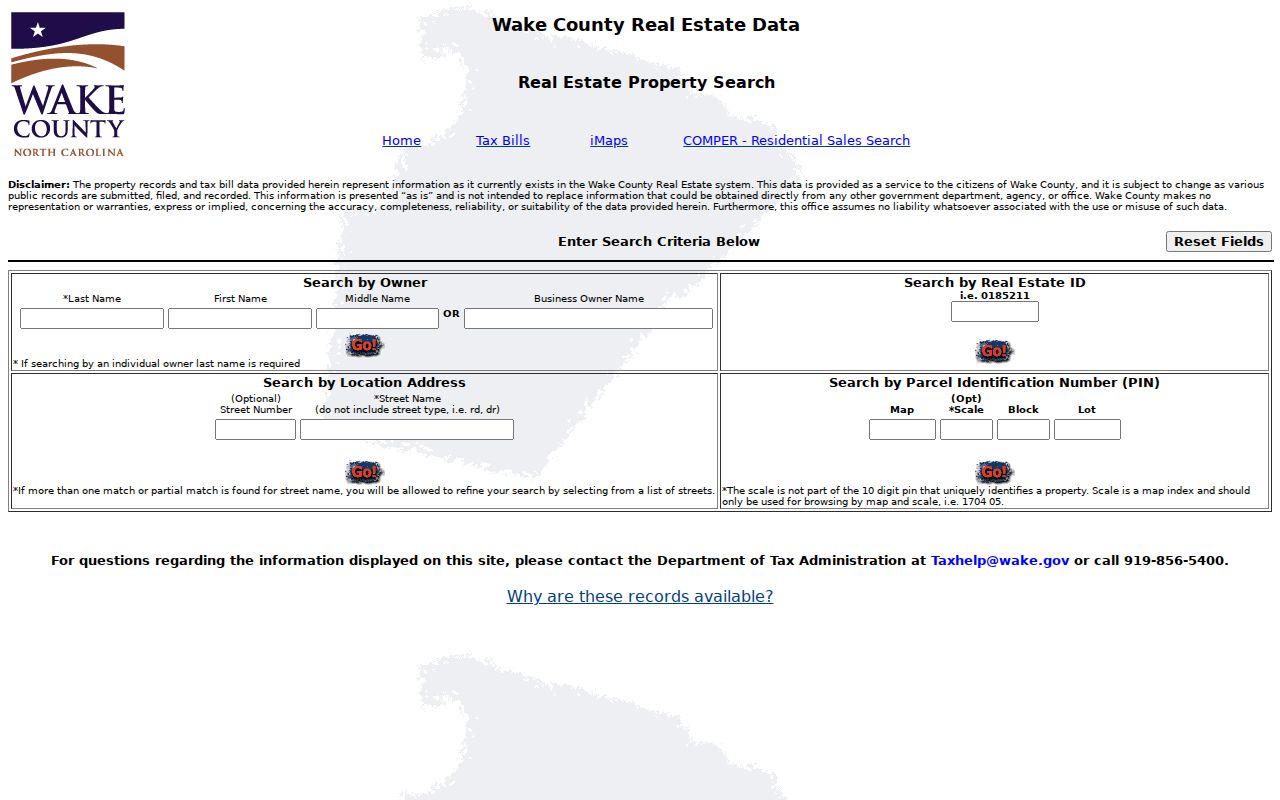
Carry the real-estate ID into the tax and map systems. It is more stable than a street label and helps separate similar addresses.
For a past-owner trail, follow a sale reference from the parcel card into the recorded instrument. Search forward and backward through later and earlier deeds, then compare tax mailing addresses. Add a dated directory, permit, or obituary only when the question concerns occupancy rather than legal ownership.
Key distinction. A tax mailing address may locate a nonoccupant owner. The situs address marks the parcel, not the owner's current home.
Trace Apex Names Through Courts
Apex has no municipal court. Wake County Superior and District Courts handle state cases, while the Clerk also keeps estates and special proceedings. The NC eCourts Portal accepts party or business names, case or record numbers, citations, attorney names, bar numbers, cross-references, and nicknames. Filter the location to Wake County when possible.
A public docket can show the case number, caption, parties and roles, attorneys, filing date, type, status, events, hearings, and public dispositions. It is still a summary. Courthouse Public Access Kiosks can search criminal defendants, case numbers, victims or witnesses, as well as civil, estate, and special-proceeding data. The paper or e-file held by the clerk is the final fallback.
| Record layer | Apex case coverage | Best use | Access route |
|---|---|---|---|
| NC eCourts Portal | Wake Superior and District Court public dockets | Remote party and case discovery | Online public search |
| Wake courthouse kiosk | Criminal, civil, estates, special proceedings | On-site name and case lookup | Public Access Kiosk |
| Clerk file | Public documents filed in Wake | Reading the actual pleading or order | Counter inspection or copy request |
| Eastern District of North Carolina | Federal cases tied to Apex | Federal party dockets | PACER or courthouse terminal |
Juvenile, adoption, sealed, and expunged matters do not appear like ordinary public cases. A missing portal result cannot prove a case never existed.
North Carolina calls its statutory removal process an expunction. Protected exhibits, personal identifiers, and abuse-related addresses may also be withheld even when the surrounding case docket is public. Ask for the case file by number and let the clerk identify what can be inspected.
Order Apex Vital Records Correctly
Wake Register of Deeds issues local birth, death, and marriage certificates for Wake events. The North Carolina Office of Vital Records registers statewide births, deaths, fetal deaths, marriages, and divorces. A divorce judgment comes from the clerk in the county where it was granted; a state divorce certificate is only the vital-event record.
North Carolina does not use a simple rule that opens births after 100 years or deaths after 50. Certified copies are controlled by Chapter 130A, especially G.S. 130A-93. Eligible requesters generally include the named person and certain close relatives, people asserting a legal right, and authorized representatives. An index hit is a research lead, not a certified certificate.
For older Apex family research, turn to church and cemetery registers, estate papers, newspapers, delayed registrations, county books, and State Archives copies. The Archives covers historic marriage bonds, cohabitation records, marriage records, divorce records, and death certificates across the date ranges documented in its collections.
Read an application before paying. The state form may ask for the event type, names on the record, event date and county, parents or spouse, the requester's relationship, ID, payment, and signature. Wake's office may be the shorter route for a Wake event, while the state office is useful when the county is uncertain.
Resolve Apex Postal Geography
Apex ZIP codes 27502, 27523, and 27539 are mail-delivery areas. They do not equal the Town boundary. Annexation, postal city, and parcel jurisdiction can point in different directions, and some Apex mailing addresses may require a custodian outside Town government. Check this before asking Apex for a permit or code file.
The iMAPS parcel viewer shows the address search and map layers used to test jurisdiction.
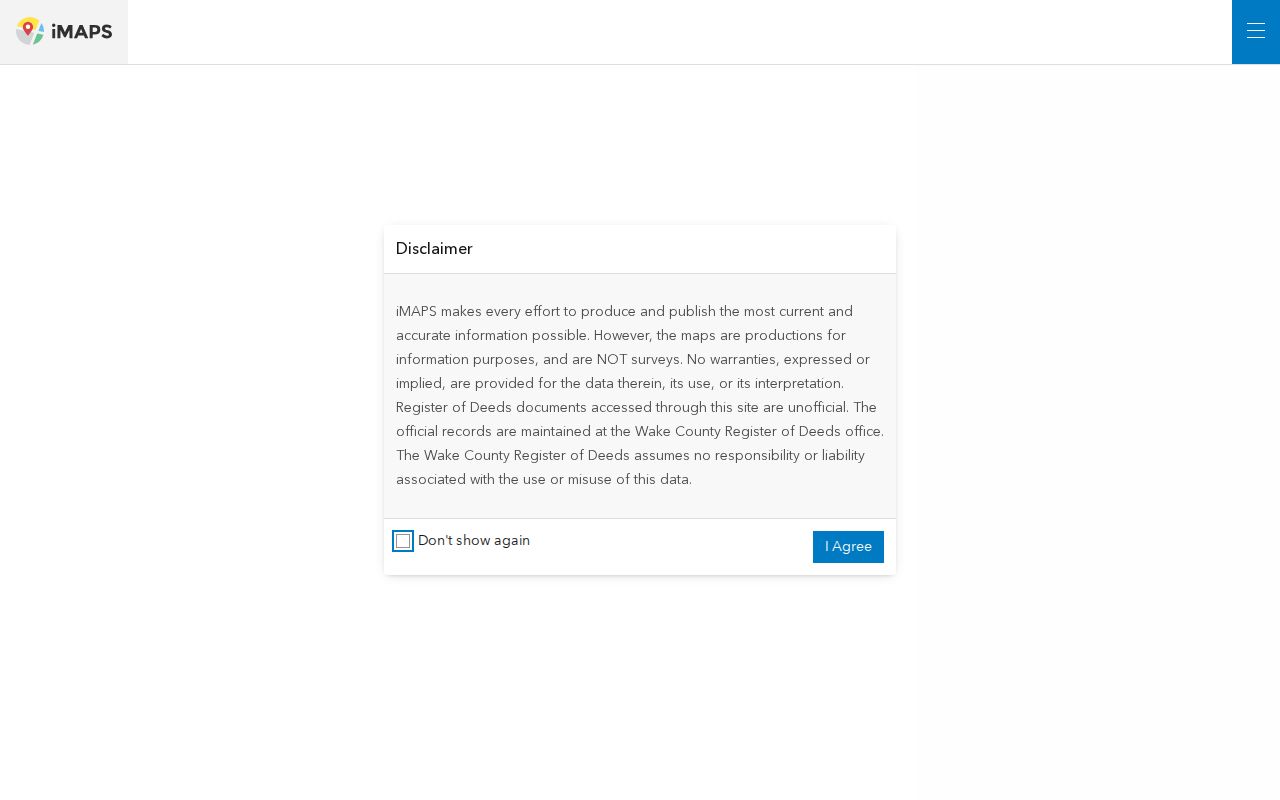
Use the parcel ID, municipal boundary layer, and recorded plat together when an address changed or a subdivision crossed a boundary.
Note: A postal result answers delivery questions, while iMAPS and recorded annexation documents answer which government held a record on a given date.
Search Apex Deeds Both Ways
The Wake Consolidated Real Property Index works like a card catalog for recorded instruments. It exposes Book/Page, Name, Date, Document Type, Map, and Advanced Search modes. Search all likely spellings, initials, entity names, and spouse names. The portal itself warns that the index is a guide and can change. The linked deed image, when available, is the instrument that supplies context.
| Wake deed control | Input | How it helps an Apex name search |
|---|---|---|
| Name | Grantor, grantee, surname variant, initials, spouse, or entity | Finds people and firms across recorded roles |
| Book/Page | Recorded book and page citation | Returns to a known instrument |
| Date | Recording date or date range | Separates common names and narrows transfers |
| Document Type | Available deed, lien, plat, or other class | Focuses the record trail on the legal event |
| Map or Advanced | Exposed parcel and record filters | Refines broad results with property data |
- Grantor
- The person or entity transferring an interest.
- Grantee
- The person or entity receiving an interest.
- Parcel ID
- The stable Wake real-estate identifier that links assessment, map, and deed research.
- Docket
- A court's dated case summary, not always the complete court file.
Search a deed name in both roles. Then record the book, page, document ID, and recording date. A deed chain can connect prior owners, while the parcel roll supplies the present tax owner. Neither source alone proves occupancy.
Apex Permit Search Needs Less
The Town's Public Information Search does not require an account. Search by address to display issued permits, or use only the last six digits of a permit number. A result opens general permit details, while linked inspection rows show the inspector and inspection outcome. Entering the whole formatted number may create a false miss.
Permit records can identify an applicant or contractor connected to a property at a set time. They do not establish residence. First confirm that the parcel was inside Apex jurisdiction, since a postal Apex address may lie outside the Town's permit system.
Reconnect Through Apex History
Olivia Raney Local History is the main Wake repository for noncirculating directories, yearbooks, vertical files, newspapers, and microfilm. Its Apex Herald and Western Wake Herald run begins January 28, 1965. Births, marriages, deaths, school honors, legal notices, clubs, churches, and business addresses can place a person in a dated local setting.
Polk and Hill city and suburban directory holdings start with volumes from the 1880s and continue in many later years. A standard entry may include a household head, spouse, occupation, street address, and phone. A reverse section starts with the street and number, then lists occupants and neighbors. Confirm whether a specific volume covers Apex and contains a reverse section with library staff.
A researcher looking for a former classmate can pair a yearbook name with a newspaper notice. For an old address, compare a directory year with the parcel deed chain, census schedule, and obituary or estate record.
Wake County was formed in 1771, while Apex developed around the railroad and incorporated in 1873. That shift changes the best source. Early people may appear in rural Wake land, tax, church, or census material before a town street address exists. Later subdivision records depend more on plats, lot references, parcel IDs, and permits.
Wake Restored Hidden Names
The Wake Enslaved Persons Project creates a rare name search into deed books. Its observed index held 2,156 items across 144 pages, with entries reaching the 1780s. Search modes include date, book, page, grantor, grantee, and an enslaved person's name.
Result rows show a record ID, date, book, page, document ID, grantor, grantee, and names extracted from the instrument. This is more than a property index. It makes people discoverable when ordinary grantor and grantee fields would leave their names buried inside a deed. Read the linked image for kinship, place, spelling, and transaction context.
Use Apex Voter Records Narrowly
The statewide Voter Search can confirm a public registration match, county, status, precinct, districts, and credited election participation. It never reveals a marked ballot or candidate choice. Use Wake County and birth year to separate same-name results, then treat address and status fields as dated administrative records.
North Carolina withholds sensitive identifiers and protects qualifying addresses. The complete field-by-field rules, public files, and Wake office channels belong in the Apex voter registration lookup.
Check Apex Safety Records Lawfully
Different official tools answer different questions. Wake detention information concerns current custody. The NC Department of Adult Correction search covers named offenders, convictions, custody, sentence, and release data within that system. The North Carolina Sex Offender and Public Protection Registry covers only the people subject to its registration law.
The state registry provides name, address, and map search options.
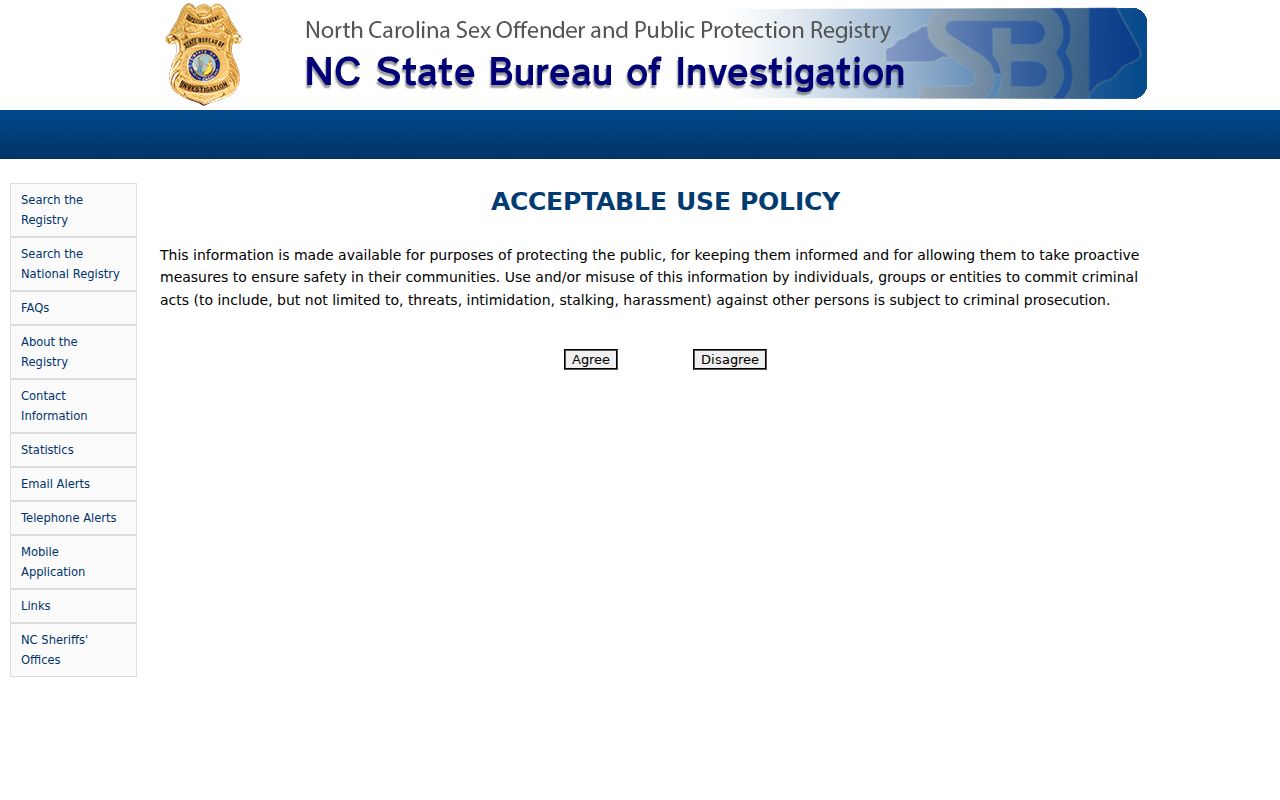
A no-result search means only that the person was not found in that tool's current public scope. It does not clear every court, arrest, or custody question.
Lawful personal use only. Do not use a public record to stalk, harass, threaten, or harm anyone. Verify sensitive findings with the official custodian.
Find Apex Business Name Trails
The North Carolina Secretary of State registry links an entity to its official name, status, registered agent, officers, and public filing addresses. Search spelling and punctuation variants. For an assumed name, combine the statewide database with Wake Register of Deeds records because the statewide system covers filings from December 1, 2017 and older certificates may remain only with the filing county.
Apex permit files can connect a contractor or applicant to a site. The parcel card shows the tax owner, and a deed may identify an out-of-state entity and mailing address. These sources describe different legal roles. Do not treat a registered agent as the owner of the company or an entity address as a person's home.
Search Unclaimed Property by Name
NCCash is North Carolina's official unclaimed-property search. It can connect an owner name with a last reported address or place when funds were turned over to the state. That makes it useful for an older location trail, an estate search, or reconnecting a family member, even when the address is no longer current.
The official search is name based.
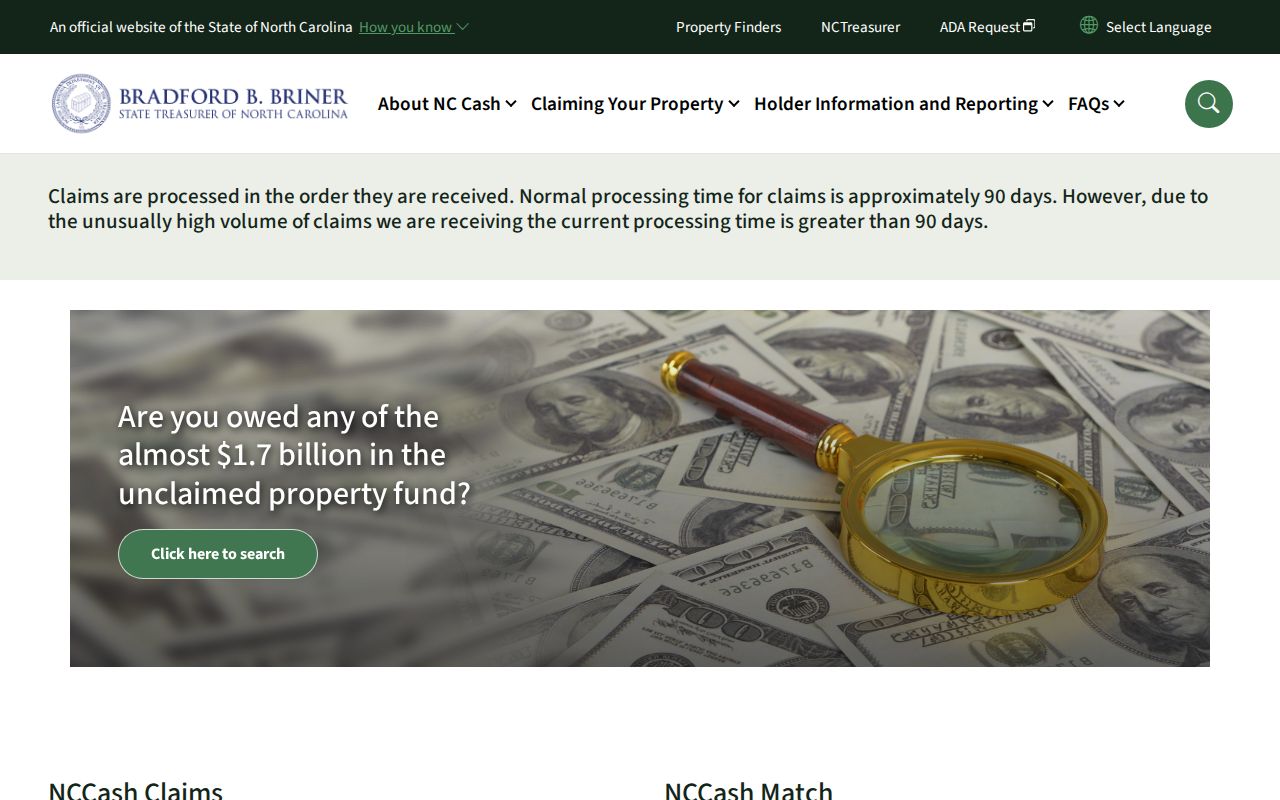
A match is not proof of identity. Follow the state claim process and provide the evidence it requests rather than relying on a similar name alone.
When Apex Online Search Ends
Online records are finding aids, not the whole archive. Complete court files may require a clerk counter. Older deeds may sit in a separate book or image series. Vital certificates need an application, identity proof, and legal eligibility. Newspaper reels and directory volumes may be marked Consult Staff. Town records can be requested from the department or Clerk by portal, mail, or counter.
| Source type | What it does well | What to do after a miss |
|---|---|---|
| Official portal | Current index fields and stable record IDs | Try spelling variants, another role, or the in-person terminal |
| Library or archive | Dated directories, newspapers, maps, and old series | Ask staff for the finding aid, volume, reel, or noncirculating item |
| Commercial compilation | Broad possible matches from mixed sources | Confirm every name, date, and address with the named custodian |
North Carolina Public Records Law lets any person inspect public records at reasonable times and obtain copies as promptly as possible. It sets no universal response deadline. Ask for the exact statutory basis when information is withheld, and request any segregable public portion.
A narrow request works best. Name the department, subject, people or address, approximate dates, and desired format. Ask to inspect first if the volume is unknown. If extensive technical or clerical work may create a special service charge, request an estimate before the custodian begins.